Meet "Mr. Turf": How O.J. Noer Shaped Milorganite's 100 Year Legacy
By Dan Austin, Horticultural Writer
The 100-year history of Milorganite and its success as a slow-release nitrogen fertilizer for turf can be directly tied to one man: agronomist Oyvind Juul “O.J.” Noer. He is considered a pioneer in the turfgrass industry. Through his research, he determined that Milorganite was an effective turf fertilizer.
Noer “Mr. Turf” greatly impacted the turf industry and became a trusted resource for golf course superintendents and turf managers on all turf-related topics. Many of the turf research protocols and management practices he discovered are still in use today.
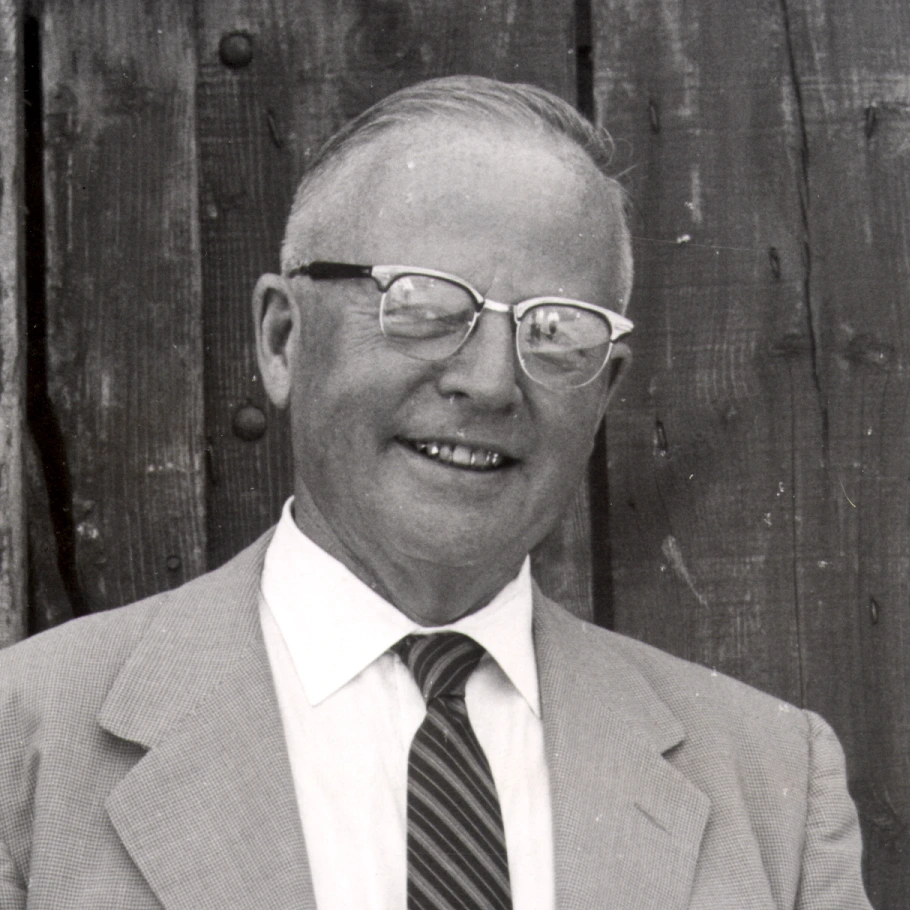
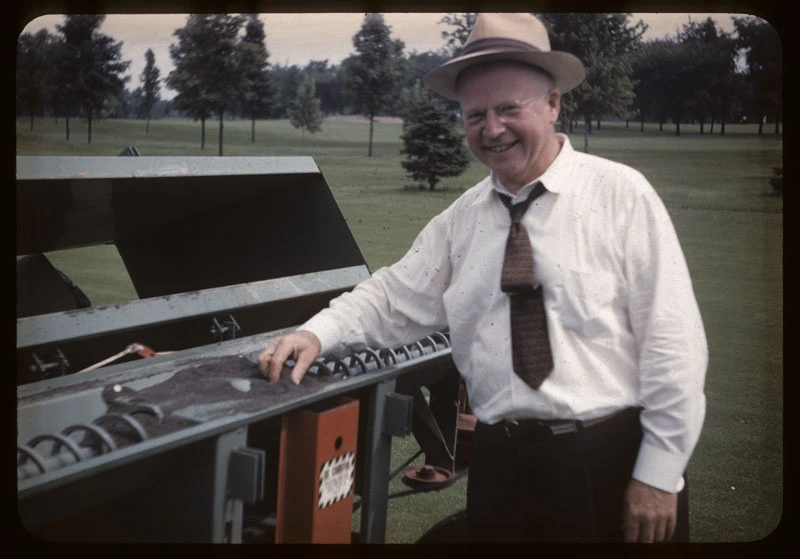
Oyvind Juul “O.J.” Noer - Agronomist & Head of the Milwaukee Sewerage Commission Turf Service Bureau 1926-1960
In celebrating Milorganite’s 100th Anniversary, we must also celebrate “O.J.” Noer for confirming that the biosolids product now known as Milorganite is an effective, safe fertilizer for low-nitrogen turf management.
He spent his career focused on one simple question: “What makes turf grow?”
Let’s start at the beginning.
Milwaukee’s Sewage Problem: Disease and Death
In the late 1800s, Milwaukee experienced rapid industrialization with an equally rapid population growth. At the time, raw sewage and industrial waste were directly released into one of the City’s three rivers, which flows into Lake Michigan. The untreated sewage was increasingly causing disease and death. The situation worsened, and in 1879, the City of Milwaukee was directed to provide adequate sewage disposal for the growing metropolis. Lake Michigan, Milwaukee’s source for drinking water, was contaminated.
Formation of Milwaukee's Sewerage Commission
In 1913, the State of Wisconsin authorized the City of Milwaukee to create a sewerage commission to address the growing problem. At the same time, in Birmingham, England, a chemist was conducting experiments on how to treat sewage sludge. He bubbled air through a sample of sludge to test its effects. Getting ready for the weekend, he turned off the bubbles. He returned on Monday to find the solids had settled and resulted in purified wastewater.
The process he discovered is now known as the activated sewage sludge (biosolids) method of sewage purification. It uses microorganisms to digest the nutrients found in the wastewater.
New Method of Wastewater Treatment
In 1915, the newly formed Milwaukee Sewerage Commission began testing this novel activated sludge sewage treatment method at a pilot facility at the Jones Island Water Reclamation Facility. On December 31, 1919, the Commission formally adopted the process to address the City’s growing sewage problem.
The Wisconsin Legislature further directed the creation of the Metropolitan Sewerage Commission in 1921 to build out intercepting sewers to connect municipal sewers to a central sewage processing facility where all sanitary waste would be treated. In 1923, construction began on the world’s first large-scale, state-of-the-art wastewater treatment facility using the activated sludge process.
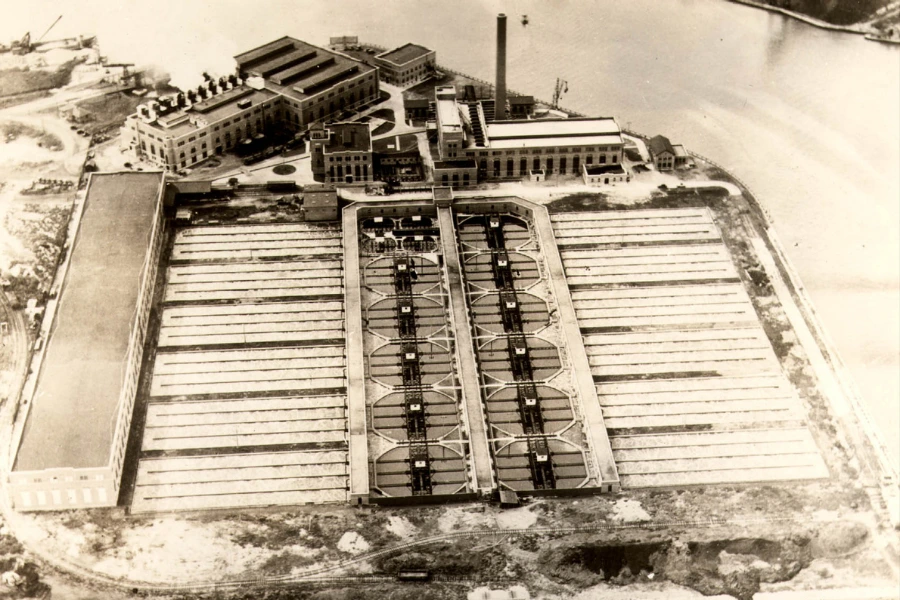
The Jones Island Water Reclamation Facility that produces Milorganite Fertilizer since 1926
In 1925, the Commission concluded that biosolids were a satisfactory source of organic nitrogen, as opposed to mined or other organic products, and were as good and less expensive than other fertilizers. Most importantly, it was an ideal fertilizer for golf courses. The Jones Island Water Reclamation Facility began processing sewage in 1925.
At the time, the Jones Island processing plant cost about $15 million, with an additional $20 million invested in constructing the sewage lines.
Serving approximately 575,000 residents, the new plant was estimated to treat enough sewage to produce 35,000 tons of dry solids per year.
What to do with all the dry material? Landfill vs. Fertilizer
The Sewerage Commission had the foresight to choose an enduring solution for Milwaukee’s wastewater treatment, helping ensure a future of safe water for both consumption and recreation. With the adoption of the biosolids method and construction of the world’s first-of-its-kind sewage processing plant, the Commission had a new challenge: What to do with the resulting tons of dry solids?
Possible solutions veered in two directions: treat the resulting dry solids as waste and ship to a landfill, or explore the possibility that this nutrient-rich byproduct could be used as an effective fertilizer.
Landfilling the incredibly high volume of material would be costly for taxpayers. There are also the long-term environmental implications, but that likely wasn’t part of the decision-making at the time.
The Sewerage Commission chose the route that could actually save taxpayer money and didn’t dispose of a potentially useful fertilizer product.
In 1923, the Commission established and funded a fellowship at the College of Agriculture at the State Land Grant University in Madison, Wisconsin. World-renowned soil scientist Dr. Emil Truog directed the fellowship to research how the dry solids resulting from the biosolids method could be used as a fertilizer.
Truog chose one of his graduate students, Oyvind Juul “O.J.” Noer, as the recipient of the fellowship to conduct the work. Noer was now responsible for all the work related to determining the value of the new, nutrient-rich biosolids fertilizer that would soon become known as Milorganite.
About “O.J.” Noer
In 1912, Noer graduated with his Bachelor of Science degree in soil science from the University of Wisconsin-Madison. In 1914, he was appointed as the State of Wisconsin’s Soil Chemist, where he helped establish the first soil testing lab in the United States.
Returning from World War I, he wanted to avoid working for the family “wagon works” business, instead opting for an education and career focused on soil. He contacted the Soil Science Department at the University of Wisconsin to express his interest in pursuing a graduate degree, but he needed funding. As fate would have it, the Sewerage Commission’s fellowship was established in 1923.
Noer was hired by the Sewerage Commission in 1926. Noer is best known as Head of the Sewerage Commission Turf Service Bureau and continued in that role until his retirement in 1960. Unfortunately, Noer never received his doctorate. He was too busy working for the Sewerage Commission to complete his thesis.
How Milorganite Got It’s Name
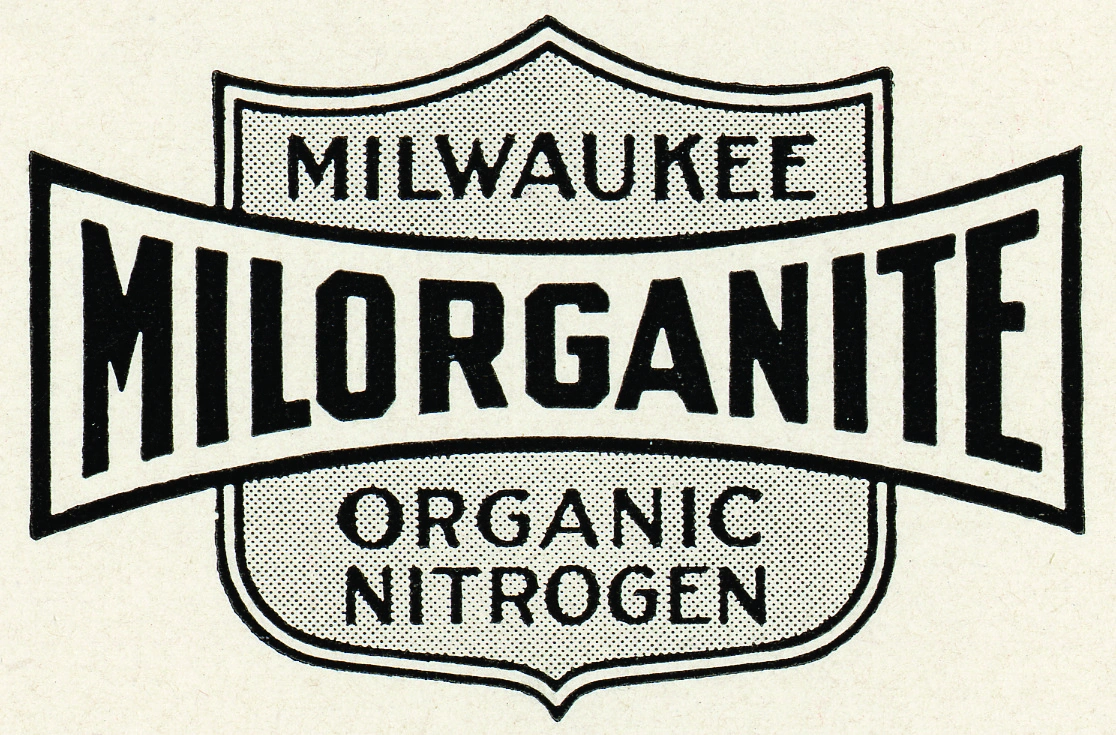
The Milwaukee Sewerage Commission decided that the dry product resulting from the biosolids process was marketable, but it needed a name. They advertised a naming contest for six months in the National Fertilizer (Association) magazine, The Fertilizer Review. In 1925, out of 233 suggested names, the $250 first prize was awarded to McIver and Son of Charleston, South Carolina, for their entry "Milorganite"—MILwaukee-ORGAnic-NITrogen.
Milorganite Production and Sales Began
In late 1925, the Sewerage Commission started taking orders for Milorganite. Production began in 1926, and by the end of the year, approximately 5,500 tons of Milorganite were in storage, with orders for 2,500 tons.
The first shipments of Milorganite were on Feb 10, 1926, to Worcester Fertilizer Co in Snow Hill, Maryland; Union Chemical Works in North Wales, Pennsylvania; and WB Tilghman Fertilizer in Salisbury, Maryland.
The fertilizers available to turf managers at the time included manures, dry blood, composted materials, ammonium sulfate, and other single-nutrient products. They were difficult to handle and potentially detrimental to the turf if applied incorrectly. Milorganite was the first pelletized, dust-free, multi-nutrient, and easy-to-use fertilizer available at the time.
Noer started his work by determining the nutrient analysis of Milorganite—the percent of nitrogen, phosphorus, and potassium (N-P-K)—as well as micronutrients, which plants only need in very small quantities. Rather than rely on further lab analysis to determine the product’s usefulness as a fertilizer, which was common practice at the time, he took a practical, applied research approach.
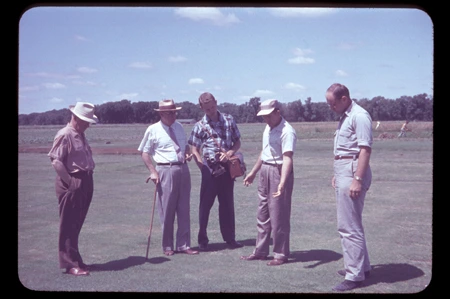
Noer turned his attention from agricultural crops to turf.
Through his research, Noer found that biosolids were a superior lawn fertilizer and cost about one-third of what was being used at the time. There were distinct advantages. The product was easy to handle, and there was no danger of burning turf.
Next, Noer expanded his research into golf courses.
One of the first test plots Noer established was at Blackhawk Country Club in Madison, Wisconsin. He expanded his research and established test plots at other golf courses, first locally, then, with repeated positive results, throughout the country.
Word of Noer’s success spread among greenkeepers and turf managers throughout the country.
Shifting from Agriculture to Turf Trials
Noer first tested Milorganite on agricultural crops but found that the low nitrogen content wasn’t sufficient and needed to be amended for row crops.
Noer credits Dr. Truog with the suggestion that the product may be effective on golf courses, which were rapidly being constructed throughout the country at the time to meet the increasing public interest in the sport. At the time, farm manure and ammonium sulfate were being used to fertilize golf course turf, if anything was used at all. For Milorganite, it was perfect timing.
Findings Credited to Noer
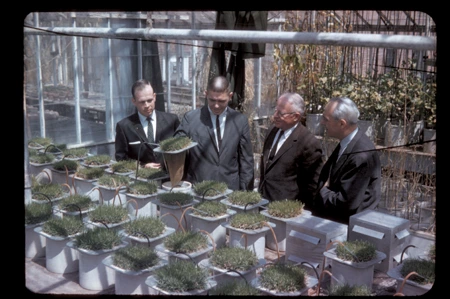
In the 1920s, soil testing was evolving from primarily theoretical research relying on chemical analysis, which was standard at the time, to trial-based, applied research. Noer was a leader in conducting extensive field trials to test biosolids as an effective turf fertilizer.
Noer established the Sewerage Commission’s soils lab in the mid-1930s, which was the first lab exclusively dedicated to turf.
Many of the soil testing protocols and evaluation tools he developed are still used today. It was Noer, for example, who determined the correct sampling depth for turf soils. He determined that a 2” deep turf soil sample provided accurate nutrient measures. Deeper soil samples could easily lead to misleading nutrient measures that could result in recommendations that may not be warranted or could damage turf.
Noer also found that thatch influenced turf nutrition and requested that thatch be included as part of the soil sample. His later research found that most herbicides and insecticides behave differently when applied to thatched vs. non-thatched turf.
He was the first to diagnose iron chlorosis as a nutrient deficiency rather than the result of a disease.
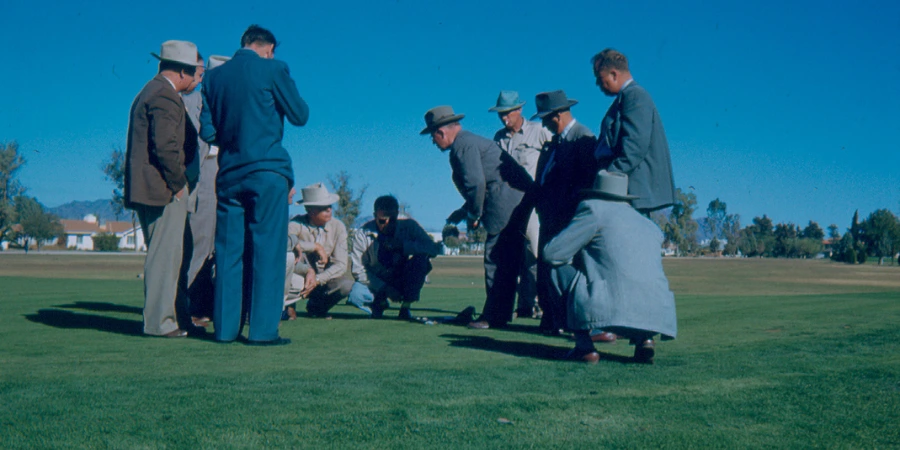
He analyzed a season’s worth of turf clippings from several golf courses and found that the nutrient analysis of the clippings was 3-1-2 (N-P-K), instead of the readily accepted 1-4-2 analysis at the time. After thousands of tests, he demonstrated that grass clippings, rich in nutrients, were best left on the lawn after mowing. Six times as much nitrogen, and nearly as much potassium, was needed in areas where grass clippings were removed. This finding remains the basis for Milorgantie’s application recommendations today for a low-nitrogen, turf fertilization.
Noer was a true agronomist. He tested many new products and was involved in trials of fungicides, insecticides, and herbicides under actual playing conditions.
Noer Traveled Extensively Sharing His Turf Knowledge
Throughout his career, Noer was a trusted, invaluable resource to golf course superintendents and greenskeepers throughout the country. Greenskeepers were often tight-lipped about their turf maintenance practices. By comparison, Noer freely shared his knowledge. Everything he learned about turf he readily shared, from the diagnosis of turf problems and fertilization to turf-management practices.
It’s estimated that during his lengthy career, Noer visited and inspected approximately 80% of golf courses in North America at the time.
He traveled extensively, not only nationally but internationally, including England, Spain, Japan, Mexico, Venezuela, India, Puerto Rico, and the Caribbean Islands. It’s estimated that he spent almost as much time in Canada as he did in the United States.
He wrote extensively on turf and spoke at conferences throughout his career.
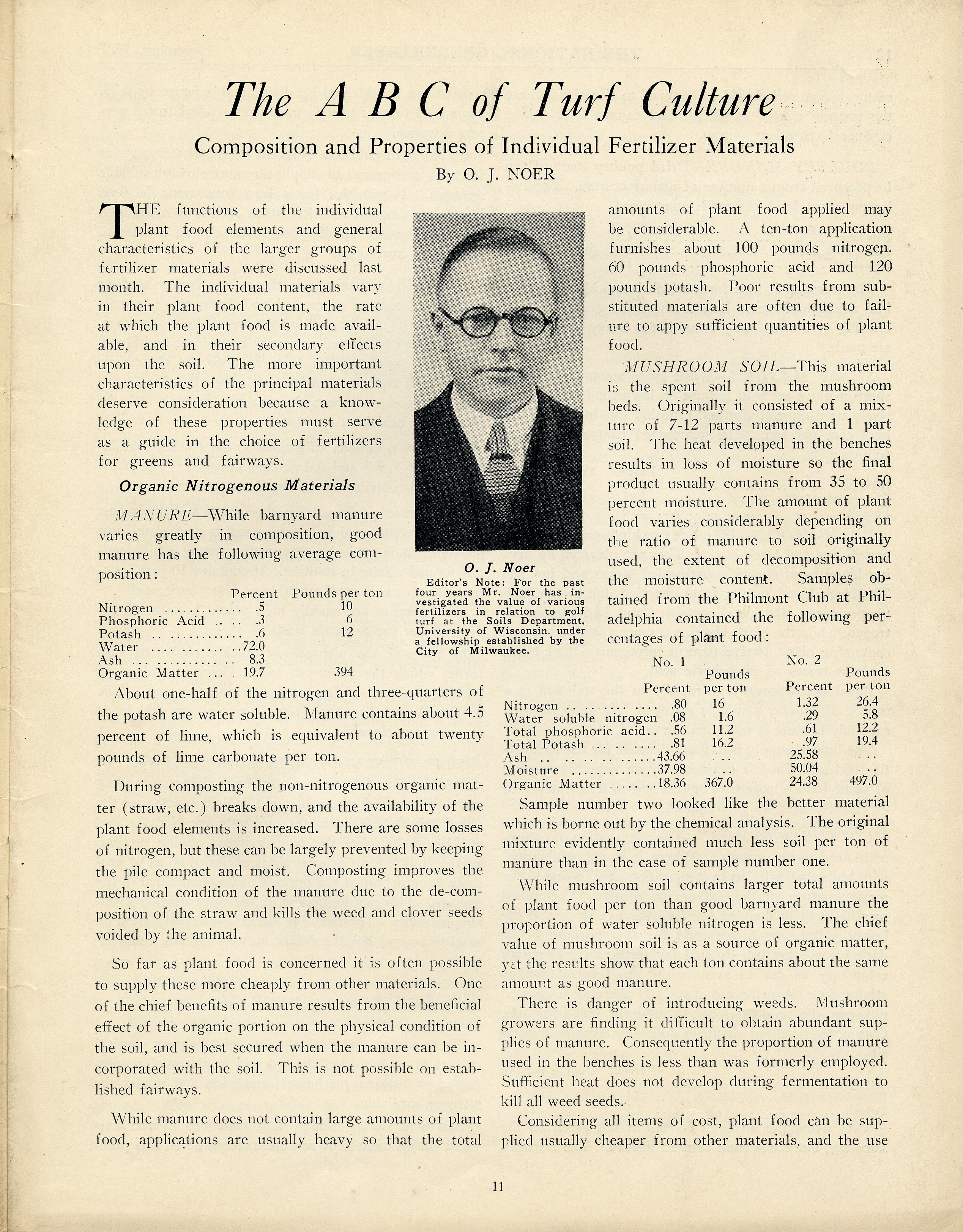
His writings were consolidated into a 1928 book, ABC of Turf Culture, which represents one of the earliest integrated works on turf science.
Respected, Honored by Golf Course Superintendents
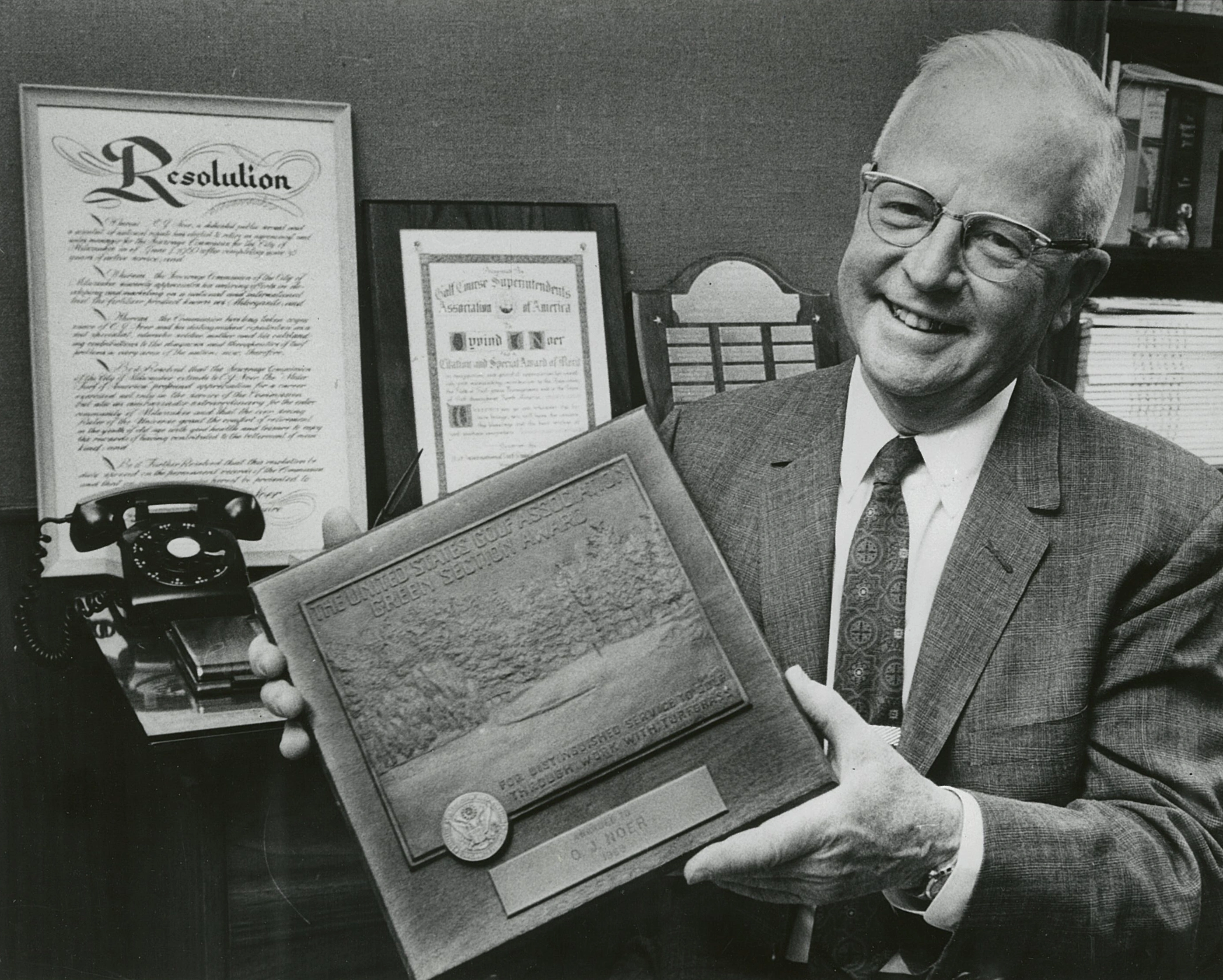
When Noer retired in 1960, he was given the title “Mr. Turf” by the Golf Course Superintendents Association of America (GCSAA) at their annual meeting. In fact, the entire conference was dedicated to Noer for his decades of agronomic service to golf course superintendents and the turf industry. He is the only three-time recipient of the GCSAA Distinguished Service Award.
The United States Golf Association (USGA) honored Noer with its Green Section Award "For distinguished service to golf through work with turfgrass". His name was entered into the Wisconsin State Golf Association's Hall of Fame in 1985.
O.J. Noer Research Foundation, Inc.
Upon his death in 1966, the O.J. Noer Research Foundation, Inc. was established to support turfgrass research and education.
During his career, Noer accumulated many books, journals, and conference proceedings related to the science, culture, and maintenance of turfgrass. The Foundation decided to donate Noer’s extensive collection to Michigan State University, making the resources readily available to scholars, students, and professionals. The O.J. Noer Memorial Turfgrass Collection was donated to the University in 1968, adding to the University’s already extensive collection of turfgrass literature.
The Noer/Milorganite Image Collection
In 2000, the Milwaukee Metropolitan Sewerage District (MMSD) gave an indefinite loan of the Noer/Milorganite Image Collection, widely known as the “Noer slides” to Michigan State University’s Turfgrass Information Center.
The collection of photographic materials was taken primarily by Noer beginning in the 1920s. The collection features more than 14,500 35mm slides originally organized by Noer. Images range from experimental turf plots to golf courses and athletic fields throughout North America. Valuable information associated with the images includes location, maintenance practices, disease and pest control, equipment, and fertilization issues.
Celebrating 100 Years of Milorganite and O.J. Noer
O.J. Noer will always be remembered as Mr. Turf. He was an agronomist who reached iconic status among those in the turf industry by always searching for answers as to what makes turf grow.
He played a crucial role in the 100-year success of Milorganite. Through his applied research in real-world settings, he found that Milorganite wasn’t something to be discarded. Instead, he demonstrated its value as a cost-effective, easy-to-use, slow-release fertilizer, particularly for turf.
Noer was synonymous with Milorganite for decades. He was revered among golf course superintendents and turf managers nationally and internationally. They valued his research, observations, extensive turf knowledge, and his willingness to share what he learned.
O.J. Noer played such a significant role in Milorganite’s success that it’s essential that we recognize his contributions as we celebrate its 100th anniversary.
When you’re fertilizing your lawn with Milorganite this spring, give O.J. a little thank you.